Pneuma: Breath, Spirit, and the Call to Remember
A meditation on consciousness and unity, built on hypnotic rhythm and restraint, Pneuma stands as one of Tool’s most deliberate and introspective compositions. It points to a simple truth: beneath identity and flesh, we share the same breath.
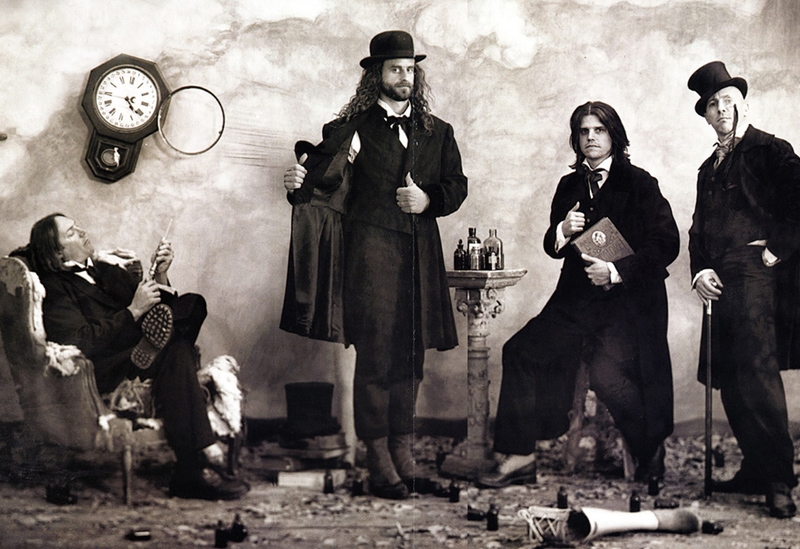
Who Tool Are
Tool are not a conventional band. Even their name suggests intent rather than identity. A tool is something meant to be used, not admired, a device for digging, cutting, or uncovering. The band has often framed their music in the same way, as an instrument for introspection, confrontation, and self examination rather than passive entertainment. At the front is Maynard James Keenan, whose lyrics avoid literal storytelling in favor of ambiguity, confrontation, and inward pressure. His writing draws from psychology, spirituality, and personal struggle, often refusing to offer comfort or easy resolution. Adam Jones shapes the sonic architecture around those ideas, using restraint, texture, and repetition to create space rather than spectacle, favoring tension and atmosphere over virtuosity. Justin Chancellor’s bass lines function as a second spine, melodic yet heavy, anchoring the music while quietly steering its emotional direction. Beneath it all is Danny Carey, whose drumming treats rhythm as a living system. Through complex polyrhythms, odd meters, and physical power, he turns time itself into a central theme, and for these reasons he is widely regarded as one of the greatest drummers of all time. Together, Tool’s music unfolds slowly and deliberately. It resists immediacy and rewards patience, returning again and again to questions of ego, fear, transformation, and the discipline of waking up.
The Song Pneuma
Pneuma is an ancient Greek word for breath or spirit, understood as the animating force that gives life its motion and presence. In the song, awakening is not framed as escape, transcendence, or becoming something new, but as remembrance. It is a return to what is already present beneath habit, identity, and distraction.
Watch the Performance
Rhythm as Consciousness
Danny Carey’s drumming in Pneuma functions as more than timekeeping; it operates as a framework for perception. The groove breathes, expanding and contracting through layered polyrhythms that anchor the body while allowing the music to unfold gradually. Around 08:00, Justin Chancellor’s bass and Adam Jones’s guitar begin to spiral around a repeating figure, circling the rhythmic center rather than driving it forward, marking a turning point where momentum gives way to suspension and reflection. Shortly after, at 09:25, the drums drop out entirely, leaving only Justin’s bass to carry the pulse for a brief moment. This absence creates a sense of weightlessness and heightened awareness before the rhythm reenters at 09:40, reinforcing the idea that time in Pneuma is something shaped, released, and reclaimed rather than merely counted. When Maynard reenters around 10:05 with Pneuma, reach out and beyond, wake up remember, we are born of one breath, one word, we are all one spark, eyes full of wonder, the voice arrives as an extension of the rhythmic cycle itself. At this moment, lyric, breath, and pulse align, and the song fully articulates its core message. Pneuma invokes the ancient idea of breath as spirit, the animating force shared by all living things. Reach out and beyond is not a call to abandon the body or the world, but an invitation to extend awareness beyond habit, ego, and conditioned identity. Wake up, remember frames awakening as recollection rather than attainment, suggesting that what has been lost is not truth, but attention. We are born of one breath, one word gestures toward a shared origin, where breath functions as both biological necessity and spiritual symbol, and word implies vibration, meaning, or consciousness itself. We are all one spark presents each consciousness as a fragment of a larger, continuous fire, distinct yet inseparable from the whole. Eyes full of wonder returns the listener to a childlike state of perception before cynicism and division take hold. As the song moves toward its close, repetition becomes ritual, and Pneuma offers no dramatic resolution, only a steady, grounded awareness rooted in sustained presence and remembering.
Closing Thoughts
Pneuma does not ask for belief. It asks for attention. Through repetition and restraint, it frames our deepest problem as spiritual amnesia and offers a grounded response: wake up, remember, breathe.